


MSG Quick help: Winter - Crampon and boot compatibility
Choosing a Winter Mountaineering Boot and Crampon Compatibility
Winter mountaineering demands gear that can withstand cold, wet conditions while keeping you safe on snow and ice. At the heart of this setup are boots and crampons—two pieces of equipment that must work together seamlessly. Here’s a detailed guide to help you make the right choice.
Step 1: Understand Boot Ratings (B1–B3)
Mountaineering boots are graded by stiffness and intended use:
| Boot Rating | Characteristics | Best For | Crampon Compatibility |
|---|---|---|---|
| B1 | Flexible sole, insulated, waterproof | Winter hillwalking, snowy paths | Compatible with C1 crampons (strap-on) |
| B2 | Semi-rigid sole, stiffer midsole, durable | Alpine routes, steeper winter climbs | Compatible with C2 crampons (hybrid) |
| B3 | Fully rigid sole, technical design | Ice climbing, mixed terrain, expeditions | Compatible with C3 crampons (step-in) |
Best boot makers:
https://www.lasportiva.com , https://www.scarpa.co.uk , https://www.salewa.com , https://www.mammut.com , https://www.lowa.com , https://www.thenorthface.com
Step 2: Know Your Crampon Types (C1–C3)
Crampons are rated to match boot stiffness:
-
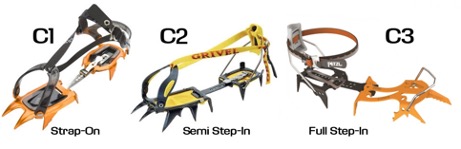
C1 (strap with plastic heel and toe cradles): Flexible, easy to fit, ideal for B1 boots and general winter walking.
-
C2 (Hybrid - toe cradle with Heel clip + front strap) more secure, suited to B2 boots for technical terrain.
-
C3 (Step-in): Full clip system (sometimes called cramp-o-matic and often with a metal toe bale and connecting wire securing point), maximum precision, designed for B3 boots in steep ice climbing.
Best crampon manufacturers:
https://www.grivel.com , https://www.blackdiamondequipment.com , https://www.petzl.com , https://www.edelrid.com , https://www.blueice.com
Step 3: Match Boot and Crampon Correctly
-
Rule of thumb: Choose your boot first, then select crampons to match.
-
A stiff crampon on a flexible boot = unsafe (it can detach).
-
A flexible crampon on a rigid boot = inefficient (poor performance on steep ice).
Other Key Considerations
-
Insulation & Waterproofing: Look for boots with Gore-Tex or equivalent to handle freeze–thaw conditions.
-
Fit & Comfort: Try boots with mountaineering socks; a poor fit can cause blisters or cold spots.
-
Terrain & Goals: Are you hillwalking in Scotland, tackling alpine routes, or climbing vertical ice? Your objective determines the boot-crampon combo.
-
Weight vs. Warmth: Heavier boots often mean more insulation, but balance this with your endurance needs.
Risks & Mistakes to Avoid
-
Buying crampons first: Always start with boots; crampons are secondary.
-
Ignoring stiffness ratings: Mis-matched gear can lead to dangerous slips or crampon failure.
-
Underestimating conditions: UK winters can swing from slushy paths to hard ice—choose versatile gear if unsure.
- Do not use micro spikes for winter mountain activity when there are snow patches present on the mountain even in lean conditions!! There's been much discussed about these, and some prolific You Tuber videos promoting their use. On anything but easy undulating ground they are extremely unsafe. In short if you're going up a hill or mountain in winter you should always carry crampons even in the leanest, patchy snow conditions. The only situation where they can be useful is at times when there is almost no snow but frozen ground presenting water ice or frost on paths and rocks - in this instance the shorter length of the spikes can be easier, and safer, to use as they don't twist your boots or present as much of a snagging risk.
-
Quick Answer: Microspikes are dangerous in the mountains because they are designed only for flat or gently sloping icy paths. On steeper hillwalks, technical, or mixed terrain they lack the rigidity, length, and security of crampons, which can lead to slips, falls, and equipment failure.
Why Microspikes Can Be Risky in Mountain Terrain
Microspikes (sometimes called mini-spikes or ice grippers) are lightweight traction devices that slip over boots. They’re popular for winter walking, but in mountaineering environments they can be hazardous. Here’s why:
Key Risks of Microspikes in Mountains
-
Limited Grip: Microspikes use short chains and teeth designed for icy paths. On steep slopes (>20°), they don’t penetrate hard ice or neve effectively.
-
Flexibility Issues: They fit flexible boots, which bend under load. On technical terrain, this can cause spikes to pop off or fail to bite securely.
-
False Sense of Security: Many hikers assume microspikes are interchangeable with crampons. This misconception leads to people tackling terrain beyond their equipment’s capability.
-
Durability Concerns: Chains and rubber harnesses can break under high stress, especially in cold, rocky, or mixed conditions.
When Microspikes Are Appropriate
-
Low-angle icy trails (15–20° max)
-
Frozen paths, forest tracks, or compacted flat angled frozen snow
-
Urban or lowland winter walking
-
Final Thoughts
The boot-crampon relationship is critical: boots provide warmth and stability, crampons provide traction and safety. Think of them as a partnership—get one wrong, and the other won’t perform. For most winter hillwalkers, a B1 boot with C1 crampons is sufficient. For technical mountaineering, step up to B2/C2 or B3/C3 depending on your ambitions.
