


Too much snow - a nice problem to have!
Too Much Snow: A Nice Problem to Have in the Scottish Winter Mountains
There’s a particular kind of grin that spreads across a winter mountaineer’s face when the forecast says “significant snowfall.” It’s the same grin you see on a skier when the avalanche report politely suggests they reconsider their life choices. It’s the grin of someone who knows that, in the grand scheme of Scottish winters, having too much snow is a very nice problem to have. As I sit here on the 7th January 2026, looking at the blanket snow cover around the mountains of Lochcarron, lots of plans are running through my head.
But let’s be honest—most seasons, we spend half our time chasing freeze–thaw cycles like they’re rare wildlife sightings. We obsess over turf conditions, we debate whether a dusting counts as “wintery,” and we’ve all trudged up a hill only to find the route looking more like a damp November scramble than the alpine playground we’d hoped for.
So when the snow gods finally over-deliver, it’s worth celebrating. Even if it does come with its own set of challenges.
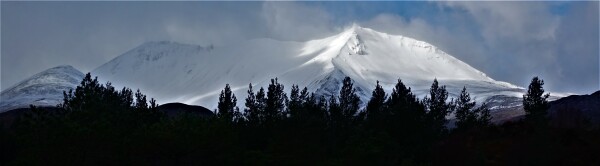
The Joy of Abundance
A fat snowpack transforms the Scottish mountains. Ridges sharpen. Gullies fill. The landscape takes on that clean, sculpted look that makes even familiar hills feel new again. Routes that are usually lean become friendlier. Approaches soften underfoot. And suddenly, the whole winter world feels bigger, brighter, and full of possibility.
Deep snow also brings a sense of adventure back into the everyday. Breaking trail becomes a team sport. Navigation becomes a craft again. Even the simplest outing feels like an expedition. There’s something deeply satisfying about earning every metre of progress.
The Challenges (and Why We Secretly Love Them)
Of course, “too much snow” isn’t all sunshine and spindrift. It slows you down. It buries the path. It turns a 5-hour day into a 7-hour one. It demands more planning, more awareness, and more respect.
But here’s the thing: these challenges are part of what makes winter mountaineering meaningful.
-
Avalanche awareness becomes real, not theoretical. You’re reading the landscape, making decisions, and teaching clients skills that matter.
-
Route choice becomes dynamic. You’re adapting, thinking, and using every bit of experience you’ve earned.
-
The hills feel wild again. And that’s why we go—because wildness is the antidote to the rest of life.
Too much snow forces us to slow down, to pay attention, to be present. It’s a reminder that the mountains set the terms, not us.
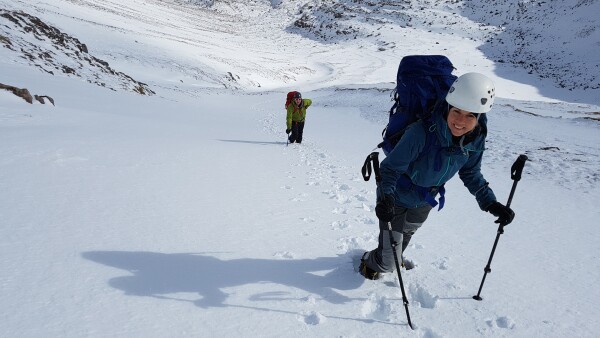
A Guide’s Perspective: The Best Kind of Busy
For those of us who spend our winters teaching, leading, and helping others discover the magic of the Scottish hills, a snowy season is a gift. It means better conditions for learning. More reliable terrain for practising movement skills. More opportunities to introduce people to the full winter experience—not just the icy, wind-scoured version.
Clients feel like they’re getting the real deal. Guides get to teach the stuff that matters. Everyone goes home with stories worth telling.
And yes, we might spend a little more time digging out cars, wading through drifts, or explaining why “it looked fine on Instagram” doesn’t count as a risk assessment. But that’s all part of the fun.
In the End, It’s a Celebration
Too much snow means winter has truly arrived. It means the hills are alive, the routes are in, and the season has teeth. It means we get to do what we love in conditions that remind us why we fell for winter mountaineering in the first place.
So here’s to the deep days. The buried fences. The thigh-burning approaches. The avalanche forecasts that make you pause. The ridges rimed white and the gullies fat with possibility.
If “too much snow” is the worst problem we face this winter, then we’re doing pretty well.
Some favourite weather resources:
https://www.mwis.org.uk/forecasts/scottish
https://www.mountaineering.scot/safety-and-skills/weather-and-avalanche-forecasts
Mountain weather forecast - Met Office